Diving into the world of yield curves and recession predictions, this introduction sets the stage for an insightful exploration of how market trends can impact the economy. With a focus on clarity and engagement, readers are invited to unravel the complexities of financial forecasting.
Exploring the nuances of yield curves and their predictive power, this overview sheds light on the intricate relationship between market indicators and economic downturns.
Introduction to Yield Curve
In finance, a yield curve represents the relationship between interest rates and the time to maturity of a debt security. It plots the interest rates of bonds with the same credit quality but different maturity dates.
Yield curves are essential in financial markets as they provide valuable insights into the economy’s expectations and future interest rate changes. Investors, policymakers, and analysts use yield curves to gauge economic conditions, inflation expectations, and potential market trends.
Graphing and Interpretation of Yield Curves
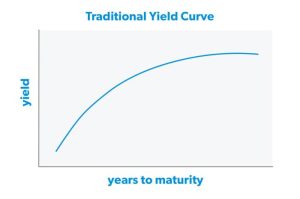
Yield curves are typically graphed on a chart with the x-axis representing the time to maturity of bonds, while the y-axis displays the corresponding interest rates. There are three main types of yield curves: normal, inverted, and flat.
- Normal Yield Curve: In a normal yield curve, longer-term bonds have higher interest rates than short-term bonds, indicating a healthy economy with expectations of future growth.
- Inverted Yield Curve: An inverted yield curve occurs when short-term interest rates are higher than long-term rates, often signaling an impending recession due to market concerns.
- Flat Yield Curve: A flat yield curve suggests uncertainty in the economy, with little difference between short-term and long-term interest rates.
Types of Yield Curves
When it comes to analyzing yield curves, there are three main types that investors and economists pay close attention to: normal, inverted, and flat.Normal Yield Curve:A normal yield curve is typically upward sloping, indicating that short-term interest rates are lower than long-term interest rates. This curve shape is considered a sign of a healthy economy, where investors expect higher returns in the future due to anticipated economic growth.Inverted Yield Curve:Conversely, an inverted yield curve occurs when short-term interest rates are higher than long-term interest rates.
This curve shape is often seen as a warning sign of an impending recession, as investors may be pessimistic about the future economic outlook.Flat Yield Curve:A flat yield curve, as the name suggests, shows little to no difference between short-term and long-term interest rates. This curve shape reflects uncertainty in the market and can signal a potential slowdown in economic growth.Historical Instances:One notable historical instance of an inverted yield curve signaling a recession was in 2006, when the yield curve inverted before the 2008 financial crisis.
On the other hand, a normal yield curve was prevalent during the economic expansion of the late 1990s.
Impact of Yield Curve Types
- Normal Yield Curve: Indicates optimism and confidence in the economy.
- Inverted Yield Curve: Suggests concerns about economic downturns.
- Flat Yield Curve: Reflects uncertainty and potential economic stagnation.
Yield Curve Inversion
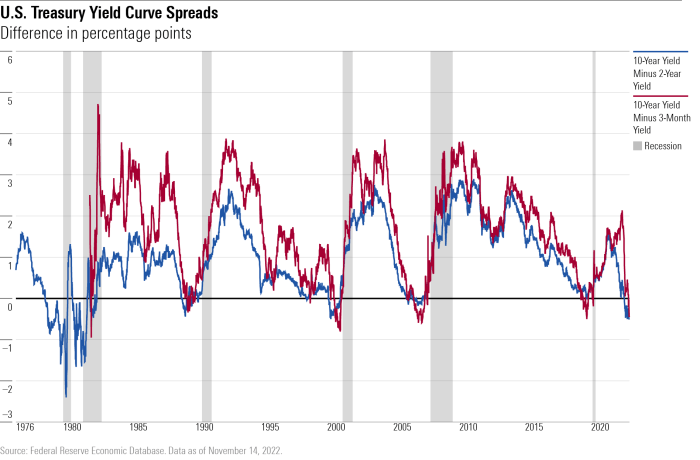
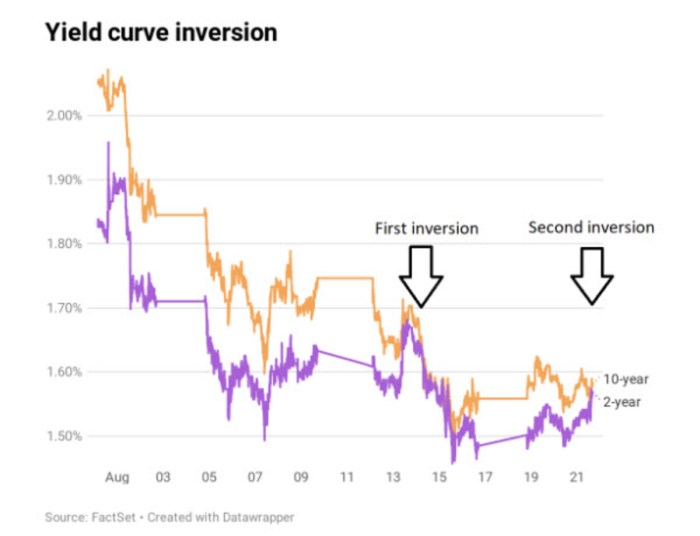
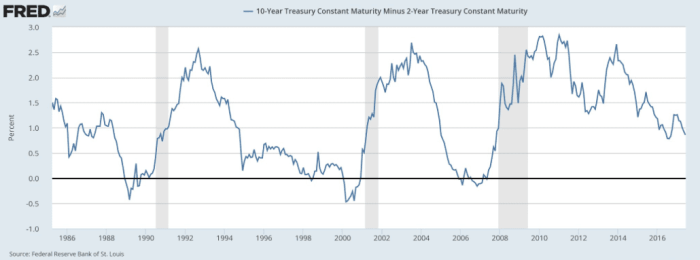
Yield curve inversion is a phenomenon in which short-term interest rates are higher than long-term interest rates. This is significant because it often serves as a powerful indicator of an impending recession.
Implications for the Economy
When the yield curve inverts, it suggests that investors have a pessimistic outlook on the economy’s future performance. This can lead to a decrease in lending, investment, and overall economic activity. Inversions are often followed by a period of economic downturn, making it a crucial signal for policymakers and investors.
Historical Data Analysis
Historical data has shown a strong correlation between yield curve inversion and recessions. For example, the last seven recessions in the United States were preceded by yield curve inversions. This historical pattern has led many economists to view yield curve inversion as a reliable predictor of economic downturns.
Leading Indicators of Recession
When it comes to predicting recessions, analysts often rely on a combination of leading indicators to get a clearer picture of the economic landscape. These indicators are crucial in determining the likelihood of an impending recession and help in making informed decisions.
Unemployment Rate
The unemployment rate is a key indicator that analysts closely monitor. A rising unemployment rate can signal economic distress and potential recession. When businesses start laying off workers due to a slowdown in demand, it can have a ripple effect on the overall economy.
Consumer Confidence Index
Consumer confidence plays a significant role in the health of the economy. When consumers are optimistic about the future, they are more likely to spend, which in turn drives economic growth. A decline in consumer confidence can be a warning sign of a looming recession.
Manufacturing Index
The manufacturing index provides insights into the health of the manufacturing sector, which is a crucial part of the economy. A decline in the manufacturing index can indicate a slowdown in production and overall economic activity, potentially leading to a recession.
GDP Growth
GDP growth is a fundamental measure of economic performance. A significant slowdown in GDP growth or consecutive quarters of negative growth can point towards an economic downturn. Analysts closely monitor GDP figures to gauge the overall health of the economy.
In conclusion, the discussion on yield curves and recession prediction unveils the intricate dance between financial data and economic realities. By understanding these market dynamics, analysts can better navigate the uncertainties of the future with informed insights and strategic foresight.
Expert Answers
What is the significance of yield curves in financial markets?
Yield curves provide valuable insights into market expectations and can help analysts predict future economic trends.
How reliable is yield curve inversion as a recession indicator?
Yield curve inversion is considered a powerful recession predictor due to its historical correlation with economic downturns.
What are some leading indicators commonly used alongside yield curves for recession prediction?
Analysts often combine yield curve data with other economic indicators to enhance the accuracy of recession forecasts.