
Delving into the Impact of yield curve on investments, this introductory paragraph aims to draw in the audience with a compelling overview of how yield curves shape investment strategies and decisions.
Exploring the nuances of yield curves and their impact on the financial market, this discussion uncovers the intricate relationship between yield curve shapes and investment outcomes.
Yield Curve
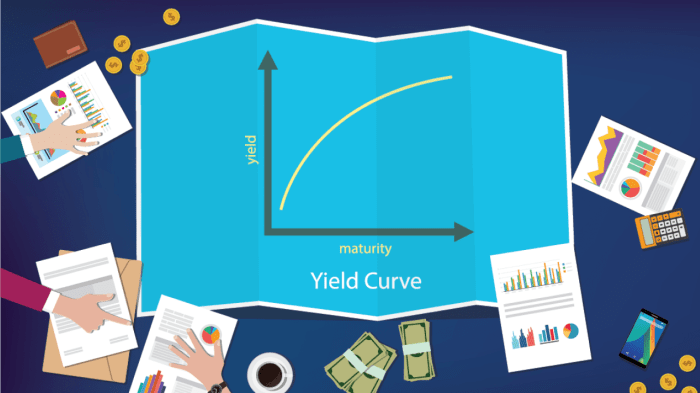
A yield curve is a graphical representation of the relationship between the interest rates and the time to maturity of debt securities. It shows the yields on bonds of similar credit quality but different maturities.
Types of Yield Curves
- Normal Yield Curve: In a normal yield curve, longer-term bonds have higher yields compared to shorter-term bonds. This indicates an expectation of economic growth.
- Inverted Yield Curve: An inverted yield curve occurs when shorter-term bonds have higher yields than longer-term bonds. This is often seen as a sign of an impending economic downturn.
- Flat Yield Curve: A flat yield curve shows little difference between short-term and long-term bond yields, suggesting uncertainty in the market.
Construction and Representation of Yield Curve
Yield curves are constructed by plotting the interest rates of various bonds against their respective maturities. The curve can be upward sloping, downward sloping, or flat, indicating different market expectations. For example, a steep upward-sloping yield curve suggests expectations of higher future inflation rates, while an inverted curve can signal expectations of a recession.
Impact of Yield Curve on Investments
When it comes to investments, the shape of the yield curve plays a crucial role in influencing decision-making. Investors closely monitor the yield curve as it provides valuable insights into the future direction of interest rates and the overall health of the economy. By understanding how changes in the yield curve can impact different asset classes, investors can make more informed decisions to optimize their investment portfolios.
Relationship between Changes in the Yield Curve and Bond Prices
Changes in the yield curve have a direct impact on bond prices. Typically, when the yield curve steepens (long-term interest rates rise faster than short-term rates), bond prices tend to decrease. This is because investors demand higher yields on longer-term bonds to compensate for the increased risk of inflation and interest rate fluctuations. Conversely, when the yield curve flattens or inverts, bond prices may increase as investors flock to safer assets like government bonds, driving down yields.
Interpreting the Yield Curve for Informed Investment Choices
Investors use the yield curve as a tool to gauge market expectations and sentiment. A normal yield curve, where long-term yields are higher than short-term yields, signals a healthy economy with expectations of future growth. On the other hand, an inverted yield curve, where short-term yields surpass long-term yields, is often seen as a warning sign of an impending recession.
By analyzing the shape and movements of the yield curve, investors can adjust their investment strategies accordingly to mitigate risks and capitalize on opportunities.
In conclusion, the Impact of yield curve on investments is a crucial aspect of financial planning that requires a deep understanding of how yield curves can guide investment choices and strategies.
FAQ Summary
How does the yield curve impact investment decisions?
The shape of the yield curve can significantly influence investment decisions by providing insights into future economic conditions and potential returns.
What role do changes in the yield curve play in bond prices?
Changes in the yield curve can impact bond prices, with shifts indicating changes in market sentiment and inflation expectations.
How do investors use the yield curve to make informed choices?
Investors analyze the yield curve to gauge interest rate movements, economic trends, and adjust their investment portfolios accordingly.


