Beginning with Yield curve risk management, the narrative unfolds in a compelling and distinctive manner, drawing readers into a story that promises to be both engaging and uniquely memorable.
Yield curve risk management is a vital aspect of financial institutions, influencing investment decisions and overall stability. Understanding the factors and strategies involved is crucial for success in managing risks effectively.
Introduction to Yield Curve Risk Management
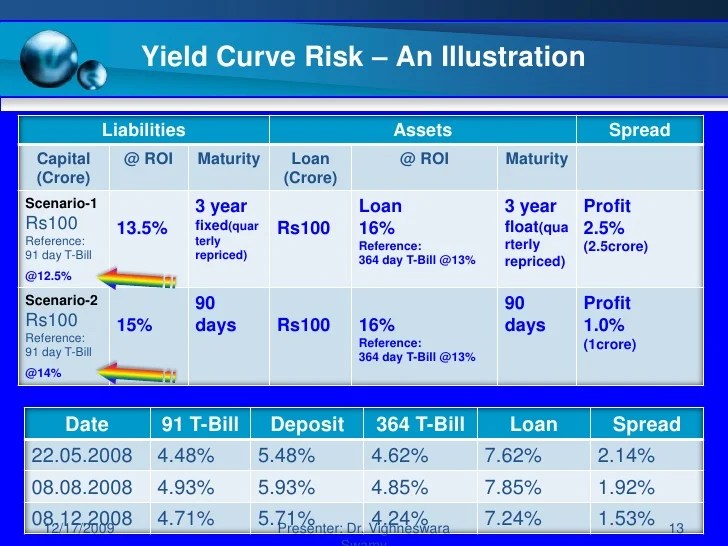
Yield curve risk management involves strategies and techniques used by financial institutions to mitigate the potential risks associated with changes in the shape of the yield curve. This risk arises due to fluctuations in interest rates across different maturities, impacting the profitability and overall financial health of the institution.
Managing yield curve risk is crucial for financial institutions as it helps them navigate the impact of interest rate movements on their assets and liabilities. By implementing effective risk management practices, institutions can protect their margins, maintain liquidity, and ensure a stable financial position in the face of market uncertainties.
The Importance of Managing Yield Curve Risk
- Minimizing Interest Rate Risk: Proper management of yield curve risk helps institutions reduce their exposure to interest rate fluctuations, which can negatively affect their earnings and capital.
- Enhancing Financial Stability: By proactively managing yield curve risk, financial institutions can enhance their financial stability and resilience to external market shocks.
- Improving Risk-Adjusted Returns: Effective yield curve risk management can lead to improved risk-adjusted returns for institutions, creating value for shareholders and stakeholders.
Potential Implications of Not Effectively Managing Yield Curve Risk
- Profit Volatility: Failure to manage yield curve risk can result in significant profit volatility, as fluctuations in interest rates impact the institution’s net interest income.
- Capital Adequacy Concerns: Inadequate risk management may lead to capital adequacy concerns, as unexpected changes in the yield curve can erode the institution’s capital base.
- Liquidity Challenges: Without proper risk management practices, financial institutions may face liquidity challenges during periods of interest rate volatility, affecting their ability to meet obligations.
Factors Influencing Yield Curve Risk
Yield curve risk is influenced by several key factors that play a significant role in shaping the risk profile of investments. Understanding these factors is crucial for effective risk management strategies.
Interest Rate Changes
Changes in interest rates have a direct impact on yield curve risk. When interest rates rise, the value of existing fixed-rate investments decreases, leading to a higher level of risk. Conversely, when interest rates fall, the value of fixed-rate investments increases, reducing yield curve risk.
Economic Indicators
Economic indicators such as inflation rates, GDP growth, and employment figures also influence yield curve risk. Positive economic indicators can lead to expectations of future interest rate hikes, increasing yield curve risk. On the other hand, negative economic indicators may signal potential interest rate cuts, which can lower yield curve risk.
Strategies for Managing Yield Curve Risk
Managing yield curve risk is crucial for financial institutions and investors to protect their portfolios from interest rate fluctuations. Various strategies can be employed to mitigate this risk effectively.
Duration Matching
Duration matching is a key strategy used in managing yield curve risk. It involves matching the duration of assets and liabilities to reduce exposure to changes in interest rates. By aligning the timing of cash flows, investors can minimize the impact of yield curve movements on their investments.
Duration matching helps to immunize a portfolio against interest rate risk by ensuring that the sensitivity of assets and liabilities to changes in interest rates is closely matched.
Use of Derivatives
Derivatives play a significant role in mitigating yield curve risk by providing a way to hedge against interest rate fluctuations. Futures, options, and swaps are commonly used derivatives to manage exposure to changes in the yield curve.
Derivatives enable investors to take positions that offset the risk of changes in interest rates, helping to protect their portfolios from potential losses.
Yield Curve Analysis
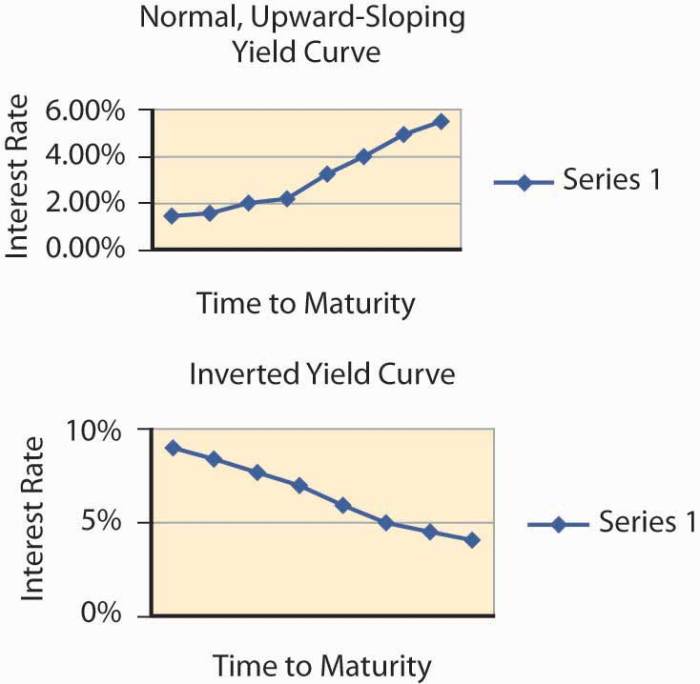
The yield curve is a graphical representation of the relationship between the interest rates and the time to maturity of debt securities. It provides valuable insights into the expectations of investors regarding future economic conditions.
Types of Yield Curves
- A Normal Yield Curve: This curve indicates that longer-term interest rates are higher than short-term rates. It typically reflects expectations of economic growth and inflation.
- An Inverted Yield Curve: In this scenario, short-term interest rates are higher than long-term rates. It is often seen as a sign of an impending economic recession.
- A Flat Yield Curve: When short-term and long-term rates are similar, it suggests uncertainty in the market regarding future economic conditions.
Yield curve analysis is crucial for investors as it provides insights into the market’s expectations for future interest rates and economic conditions.
Role of Yield Curve Analysis in Investment Decisions
- Forecasting Economic Conditions: By analyzing the shape of the yield curve, investors can make predictions about future economic growth, inflation, and interest rates.
- Asset Allocation: Understanding the yield curve can help investors decide on the appropriate mix of investments in their portfolio based on their risk tolerance and market expectations.
- Risk Management: Yield curve analysis can also help in identifying and managing risks associated with interest rate fluctuations, enabling investors to adjust their strategies accordingly.
In conclusion, managing yield curve risk is a complex yet essential practice in the financial sector. By employing various strategies and staying informed through yield curve analysis, institutions can navigate risks and make informed decisions to achieve their financial goals.
FAQs
What is the main goal of yield curve risk management?
The main goal is to mitigate potential risks associated with changes in interest rates and economic indicators.
How does duration matching help in managing yield curve risk?
Duration matching involves aligning the duration of assets and liabilities to reduce exposure to interest rate fluctuations, thus managing yield curve risk.
Why is yield curve analysis important for investment decisions?
Yield curve analysis provides valuable insights into future economic conditions, helping investors make informed decisions based on the shape and movements of the yield curve.


