Delving into the world of finance, let’s unravel the mystery behind the yield curve. From its definition to its impact on the financial market, this topic is a crucial aspect of economic analysis.
Exploring the different types of yield curves and the factors that shape them provides valuable insights into the economy’s health and future trends.
What is a yield curve?
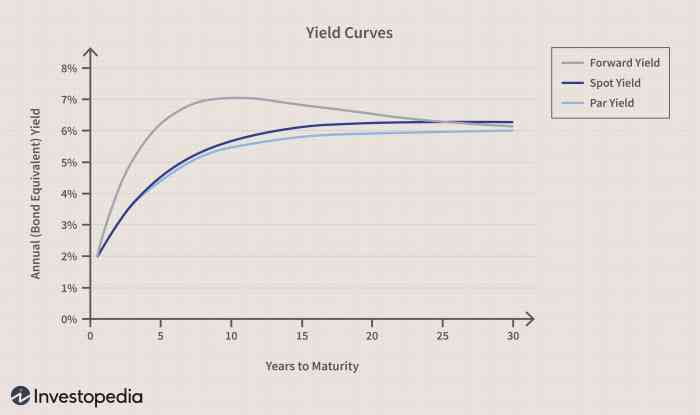
A yield curve is a graphical representation of the relationship between the interest rates and the time to maturity of debt securities. It plots the yields of bonds with similar credit quality but different maturity dates.
Significance of the yield curve
The yield curve is a crucial indicator of the overall health of the economy and can provide insights into future economic conditions. It helps investors, analysts, and policymakers assess market expectations for inflation, economic growth, and interest rates.
Construction and representation of a yield curve
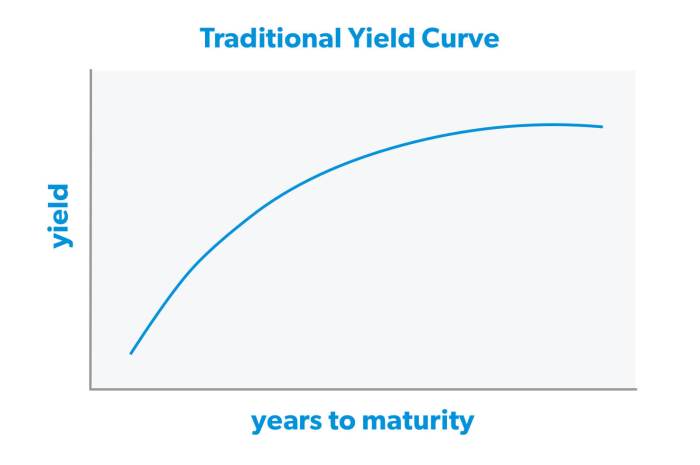
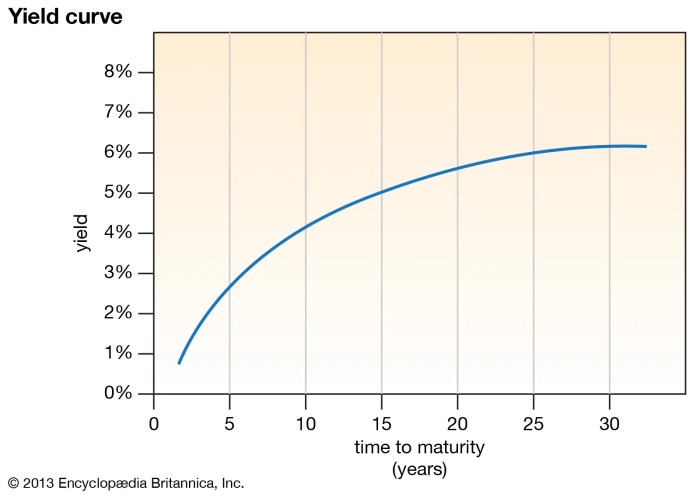
To construct a yield curve, yields of bonds are plotted against their respective maturities, ranging from short-term to long-term. The resulting curve can take various shapes such as upward sloping (normal), flat, or inverted, each indicating different market expectations.
Types of yield curves
Yield curves can take different shapes, each indicating a different scenario in the economy. The three main types of yield curves are normal, inverted, and flat.
Normal Yield Curve
A normal yield curve occurs when longer-term interest rates are higher than shorter-term rates. This is the most common type of yield curve and reflects a healthy economy where investors expect higher returns in the future due to economic growth.
Inverted Yield Curve
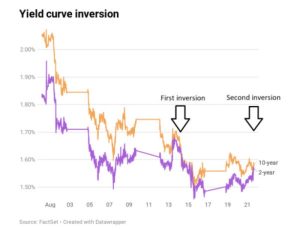
An inverted yield curve is the opposite of a normal curve, where short-term interest rates are higher than long-term rates. This is often seen as a predictor of an economic recession, as it indicates that investors are seeking the safety of long-term bonds, driving down their yields.
Flat Yield Curve
A flat yield curve occurs when there is little difference between short-term and long-term interest rates. This can signal uncertainty in the economy, with investors unsure about future growth prospects, potentially leading to decreased investment and economic slowdown.
Historically, instances of different yield curves have had significant implications for the economy. For example, the inverted yield curve in 2006 preceded the financial crisis of 2008, highlighting the predictive power of this indicator. On the other hand, normal yield curves have often been associated with periods of economic expansion and growth.
Factors influencing the yield curve
Interest rates, inflation expectations, economic indicators, market sentiment, and global events are key factors that influence the shape of the yield curve. Let’s delve into how changes in these factors can impact the yield curve.
Interest Rates
Interest rates play a significant role in shaping the yield curve. When short-term interest rates are higher than long-term rates, the yield curve tends to slope downwards, indicating a normal or positive yield curve. Conversely, when long-term rates are higher than short-term rates, the yield curve inverts, signaling potential economic downturn.
Inflation Expectations
Expectations of future inflation can also impact the yield curve. If investors anticipate higher inflation, they may demand higher yields on long-term bonds to compensate for the eroding purchasing power of their returns. This can lead to a steepening of the yield curve.
Economic Indicators
Various economic indicators, such as GDP growth, unemployment rates, and consumer spending, can influence the yield curve. Strong economic performance typically leads to higher interest rates and a steeper yield curve, reflecting optimism about future growth prospects.
Market Sentiment and Global Events
Apart from fundamental factors, market sentiment and global events can also impact the yield curve. Uncertainty in the market or geopolitical tensions can lead to a flight to safety, driving demand for long-term bonds and flattening the yield curve. Similarly, positive developments in the global economy can steepen the yield curve as investors become more optimistic about future returns.
Yield curve predictions
Investors and analysts often use the yield curve as a predictive tool to forecast future economic conditions. By analyzing the shape and movement of the yield curve, they attempt to gauge potential changes in interest rates, inflation, and overall economic growth.
Usage of the yield curve for predictions
- One common prediction made using the yield curve is the likelihood of an economic recession. When the yield curve inverts, meaning short-term interest rates are higher than long-term rates, it is often seen as a signal of an impending recession.
- Moreover, analysts also use the steepness or flatness of the yield curve to predict changes in inflation rates. A steep yield curve indicates expectations of higher inflation, while a flat yield curve suggests lower inflation expectations.
Accuracy of yield curve predictions
- Historically, the yield curve has been a fairly accurate predictor of economic downturns. Inverted yield curves have preceded the last seven recessions in the United States, making it a valuable tool for investors and policymakers.
- For example, prior to the 2008 financial crisis, the yield curve inverted, signaling the impending recession that followed. This demonstrates the predictive power of the yield curve in anticipating major economic events.
Limitations and challenges
- While the yield curve has shown reliability in predicting recessions, it is not foolproof. There have been instances where an inverted yield curve did not lead to a recession, causing some analysts to question its predictive ability.
- Additionally, the yield curve may not account for external factors or sudden shocks to the economy, leading to unexpected outcomes. It is essential to consider other economic indicators and factors when making predictions based on the yield curve.
In conclusion, the yield curve serves as a powerful tool for investors and analysts to forecast economic trends. By understanding its nuances and limitations, one can navigate the complex world of finance with more confidence.
Helpful Answers
What is the primary purpose of a yield curve?
The yield curve primarily helps in understanding the relationship between short-term and long-term interest rates, providing insights into the market’s expectations for future economic conditions.
How often do yield curves invert, and what does it signify?
Yield curves can invert periodically, with an inverted curve often indicating an impending economic recession.
Can the yield curve accurately predict economic downturns?
While the yield curve has been a reliable indicator in the past, it is essential to consider other economic factors and indicators for a comprehensive analysis.