As Types of yield curves takes center stage, this opening passage beckons readers with engaging insights into the various shapes and impacts of yield curves in the financial realm, offering a compelling narrative that is both informative and thought-provoking.
Delve into the intricacies of yield curves and discover how they shape the financial landscape, providing a foundation for understanding market trends and economic conditions.
Types of Yield Curves
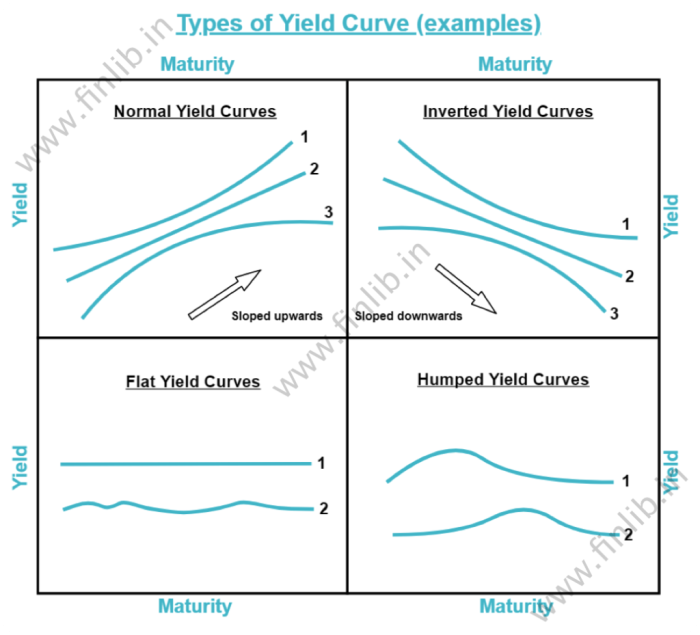
Yield curves are essential tools in the financial markets that display the relationship between bond yields and their maturity dates. They provide valuable insights into the market’s expectations for future interest rates.When analyzing yield curves, four main types are commonly observed: flat, steep, inverted, and humped. Each type has distinct characteristics that reflect different economic conditions and investor sentiments.
Flat Yield Curve
A flat yield curve occurs when the yields on short-term and long-term bonds are similar. This indicates that investors expect interest rates to remain stable in the future. It may suggest a period of economic transition or uncertainty.
Steep Yield Curve
In contrast, a steep yield curve features a significant difference between short-term and long-term bond yields. This typically occurs when investors anticipate rising interest rates. A steep curve is often associated with economic growth and inflation.
Inverted Yield Curve
An inverted yield curve occurs when short-term bond yields are higher than long-term bond yields. This situation is seen as a reliable indicator of an impending economic downturn or recession. Investors may perceive it as a signal of future economic challenges.
Humped Yield Curve
The humped yield curve combines elements of both flat and steep curves. It shows a temporary increase in yields for medium-term bonds, creating a hump shape. This curve may indicate uncertainty in the market or shifting investor expectations.These different types of yield curves provide valuable information for investors, policymakers, and analysts to understand the current state of the economy and make informed decisions regarding investments and monetary policy.
Normal Yield Curve
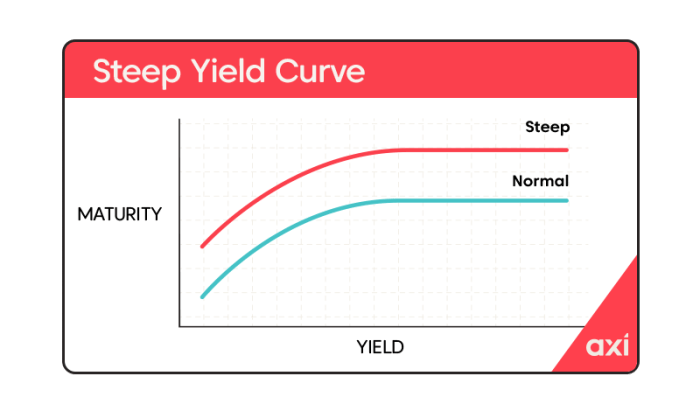
A normal yield curve is a graphical representation of the relationship between the interest rates and the time to maturity of fixed-income securities. In a normal yield curve, longer-term bonds have higher yields compared to shorter-term bonds.
Typically, the shape of a normal yield curve slopes upwards, indicating that investors expect higher returns for taking on the risk of investing in longer-term securities. This normal shape reflects a normal economic environment with healthy growth expectations and moderate inflation.
Implications of a Normal Yield Curve
- Stable Economic Growth: A normal yield curve suggests that the economy is growing at a steady pace without significant concerns about recession or inflation.
- Healthy Investment Environment: Investors are willing to invest in longer-term securities, indicating confidence in the economy’s future prospects.
- Interest Rate Expectations: The normal yield curve implies that interest rates are expected to remain relatively stable in the near term.
Examples of Economic Conditions Leading to a Normal Yield Curve
1. During periods of economic expansion with low inflation rates, a normal yield curve is common as investors anticipate sustained growth and stability.
2. In a well-functioning economy with low unemployment rates and moderate inflation, a normal yield curve is often observed, reflecting overall positive economic conditions.
3. When central banks maintain a prudent monetary policy that supports economic growth without overheating, a normal yield curve tends to prevail.
Inverted Yield Curve
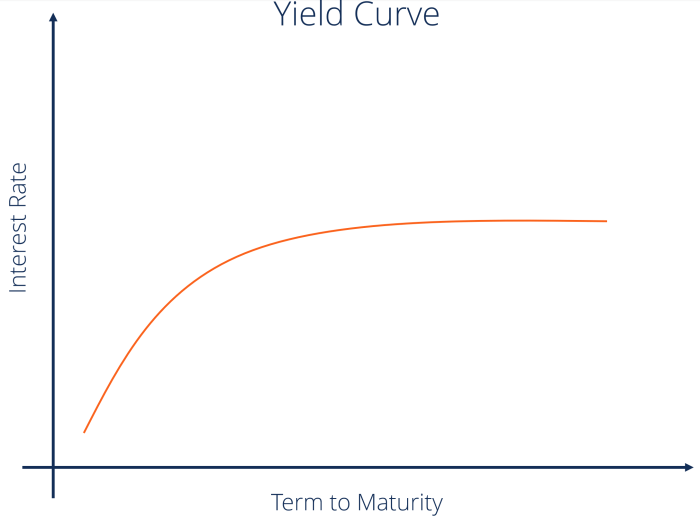
An inverted yield curve occurs when short-term interest rates are higher than long-term interest rates. This phenomenon is significant as it deviates from the normal yield curve pattern and is often seen as a warning sign for an economic downturn.When an inverted yield curve occurs, it signals that investors have more confidence in the short-term outlook compared to the long-term outlook.
This shift in sentiment typically reflects concerns about future economic growth and inflation. As a result, an inverted yield curve is considered a precursor to an economic recession because it suggests that market participants anticipate a slowdown in economic activity.Investors interpret an inverted yield curve as a signal of potential economic turbulence ahead. In response, they may adjust their investment strategies to mitigate risks and protect their portfolios.
Some investors may choose to reallocate their assets to more defensive positions, such as bonds or cash, to safeguard against potential market downturns. Others may seek out alternative investments that are less susceptible to the effects of a recession.Overall, an inverted yield curve serves as a crucial indicator for investors and economists to monitor, as it can provide valuable insights into the future direction of the economy and financial markets.
Flat Yield Curve
A flat yield curve occurs when the yields on short-term and long-term bonds are very similar. This can indicate uncertainty in the economy and is often seen as a sign of potential economic slowdown.
Implications for the Economy
When the yield curve flattens, it suggests that investors are unsure about the future direction of interest rates and inflation. This uncertainty can lead to a decrease in lending and borrowing activity, which can impact economic growth.
Reasons Behind Yield Curve Flattening
- Economic uncertainty: Market participants may be unsure about future economic conditions, causing them to seek safer investments.
- Central bank policies: Actions taken by central banks, such as interest rate changes, can influence the shape of the yield curve.
- Market expectations: If investors anticipate a slowdown in economic growth, they may adjust their investment strategies accordingly.
Impact on Borrowing, Lending, and Investment Decisions
A flat yield curve can make borrowing more expensive for businesses and individuals, as lenders may demand higher interest rates due to the perceived risks in the economy. This can lead to reduced borrowing and spending, affecting overall economic activity. On the other hand, it can also deter investors from seeking higher yields on long-term investments, potentially limiting long-term growth opportunities.
In conclusion, Types of yield curves sheds light on the diverse nature of yield curve shapes and their profound effects on investment strategies and economic forecasting, leaving readers with a deeper appreciation for the intricacies of financial markets.
Essential Questionnaire
What are some common types of yield curves?
Common types include flat, steep, inverted, and humped yield curves, each with distinct characteristics and implications.
How does an inverted yield curve signal an economic recession?
An inverted yield curve is seen as a precursor to a recession because it suggests that short-term interest rates are higher than long-term rates, indicating investor pessimism about the future economy.
What is the significance of a flat yield curve?
A flat yield curve indicates little difference between short-term and long-term interest rates, potentially signaling economic uncertainty and impacting borrowing, lending, and investment decisions.


