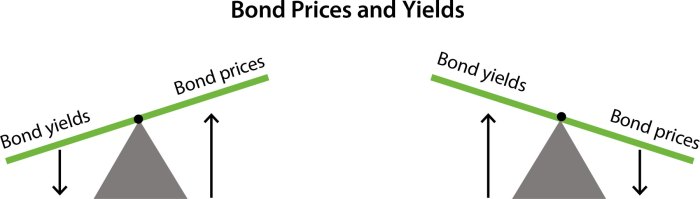
As Yield curve in bond markets takes center stage, this opening passage beckons readers with a detailed exploration of what the yield curve represents, the impact of different curve types, and how it influences investment decisions, promising an enlightening journey through the dynamics of bond markets.
Delve into the intricate world of yield curves, term structures, and factors shaping the bond market landscape as we uncover the complexities and significance of these financial indicators.
Yield Curve
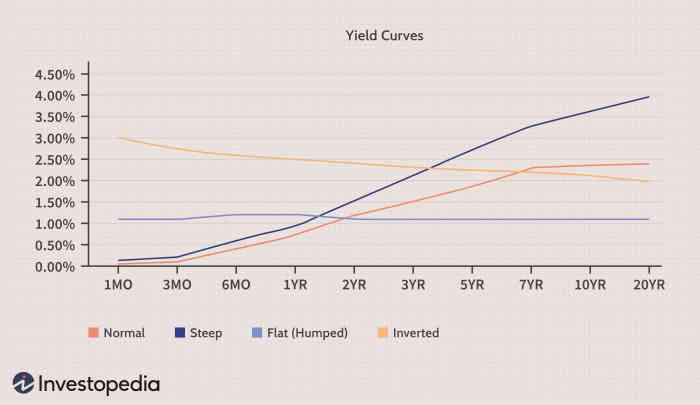
The yield curve is a graphical representation of the relationship between the interest rates (yields) and the time to maturity for a set of bonds. It shows the yields on bonds of similar credit quality but different maturities.
Types of Yield Curves
- Normal Yield Curve: In a normal yield curve, longer-term bonds have higher yields than shorter-term bonds. This indicates that investors expect higher returns for taking on the risk of tying up their money for a longer period.
- Inverted Yield Curve: An inverted yield curve occurs when shorter-term bonds have higher yields than longer-term bonds. This is often seen as a sign of an impending economic downturn, as it reflects investor expectations of lower interest rates in the future.
- Flat Yield Curve: A flat yield curve occurs when there is little difference between the yields on short-term and long-term bonds. This can indicate uncertainty about the future direction of interest rates.
Calculation and Influencing Factors
The yield curve is calculated by plotting the yields of bonds of different maturities on a graph. Factors that influence the shape of the yield curve include economic indicators, central bank policy, inflation expectations, and market sentiment. Changes in these factors can cause the yield curve to steepen, flatten, or invert, providing valuable insights into the overall health of the economy.
Term Structure of Interest Rates
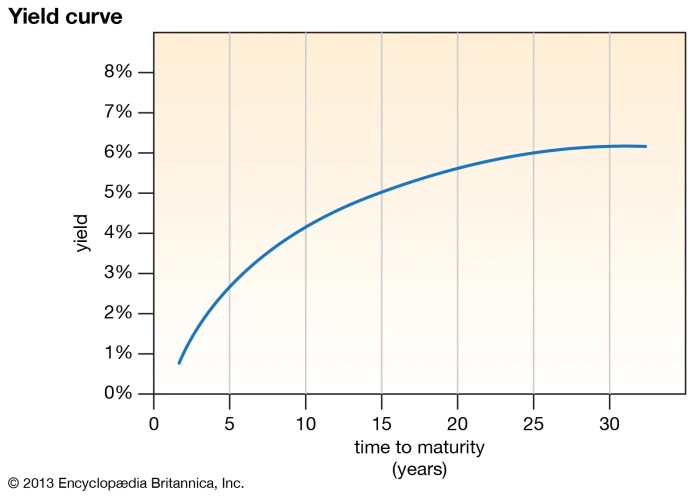
The term structure of interest rates refers to the relationship between the interest rates and the time to maturity of debt securities. It is a crucial concept in finance that helps investors understand the yield curve and make informed investment decisions.The term structure of interest rates is closely related to the yield curve, as the yield curve is a graphical representation of the term structure.
It shows the yields of different maturity bonds at a specific point in time, providing insight into market expectations and economic conditions.
Expectations Theory
The expectations theory suggests that long-term interest rates are determined by market expectations of future short-term interest rates. If investors expect interest rates to rise in the future, long-term rates will be higher than short-term rates to compensate for the perceived risk. Conversely, if investors expect rates to fall, long-term rates will be lower than short-term rates.
Liquidity Preference Theory
The liquidity preference theory posits that investors require a premium for holding long-term securities due to the increased risk and uncertainty associated with them. This theory suggests that long-term interest rates are higher than short-term rates to reflect the preference for liquidity and uncertainty over longer periods.Examples of how changes in the term structure impact investment decisions include:
- In a steepening yield curve environment, where long-term rates rise faster than short-term rates, investors may choose to invest in shorter-term securities to avoid potential losses from declining bond prices.
- In a flattening yield curve environment, where the difference between long-term and short-term rates narrows, investors may opt for longer-term securities to lock in higher yields before rates decline further.
Factors Influencing Yield Curve
The yield curve in bond markets is influenced by various factors that impact the relationship between short-term and long-term interest rates. Understanding these key factors is crucial for investors and policymakers to make informed decisions.Economic Indicators:Economic indicators such as GDP growth, inflation rates, and unemployment levels play a significant role in shaping the yield curve. Positive economic data tends to push long-term interest rates higher, resulting in a steeper yield curve.
Conversely, negative economic indicators can lead to a flattening or inverted yield curve.Monetary Policy:Central banks’ monetary policy decisions, including changes in interest rates and bond-buying programs, have a direct impact on the yield curve. When central banks raise short-term interest rates to control inflation, it can lead to an upward shift in the yield curve. On the other hand, lowering interest rates can flatten the yield curve to stimulate economic growth.Market Sentiment:Market sentiment and investor expectations also influence the yield curve.
Uncertainty, geopolitical events, and market volatility can lead to fluctuations in short-term and long-term interest rates, affecting the shape of the yield curve. Positive sentiment can result in a steepening yield curve, while negative sentiment may flatten or invert the curve.Short-term vs Long-term Rates:The impact of short-term interest rates on the yield curve is more immediate and sensitive to changes in monetary policy, economic indicators, and market sentiment.
Long-term rates, on the other hand, are influenced by factors such as inflation expectations, economic growth prospects, and global market conditions. Discrepancies between short-term and long-term rates can lead to yield curve inversions, signaling potential economic downturns.
Yield Curve Shapes
In the bond market, yield curves can take on different shapes such as steep, flat, or inverted. These shapes provide valuable insights into the state of the economy and can influence investment decisions.
Steep Yield Curve
A steep yield curve occurs when the the spread between short-term and long-term interest rates widens. This shape typically indicates expectations of strong economic growth in the future. Investors may interpret a steep yield curve as a signal to invest in riskier assets, as they anticipate higher returns in the long term.
Flat Yield Curve
A flat yield curve occurs when there is little difference between short-term and long-term interest rates. This shape is often seen as a sign of economic uncertainty or a potential economic slowdown. Investors may become more cautious and prefer safer investments during this time.
Inverted Yield Curve
An inverted yield curve happens when short-term interest rates are higher than long-term rates. This shape is considered a strong indicator of an impending recession. Investors may interpret an inverted yield curve as a signal to move their investments to safer assets, as they anticipate economic challenges ahead.
Historical Examples
- In 2006, the yield curve inverted before the 2008 financial crisis, signaling the impending economic downturn.
- A steep yield curve in the 1990s preceded a period of strong economic growth in the United States.
- During the COVID-19 pandemic in 2020, the yield curve flattened as uncertainties about the economy rose.
Investment Decisions
Investors closely monitor yield curve shapes to gauge the economic outlook and adjust their investment strategies accordingly. A steep curve may encourage riskier investments, while a flat or inverted curve may prompt a more conservative approach. By analyzing historical examples and understanding the implications of different yield curve shapes, investors can make informed decisions to optimize their portfolios.
In conclusion, the yield curve in bond markets serves as a crucial barometer of economic health, guiding investors through the twists and turns of market movements. By understanding its implications and shapes, one can navigate the complexities of the financial world with greater insight and confidence.
FAQ Summary
What factors contribute to yield curve movements?
Economic indicators, monetary policy, and market sentiment play pivotal roles in shaping yield curves.
How do different yield curve shapes impact investment decisions?
Investors interpret steep, flat, and inverted yield curves to gauge economic conditions and make informed investment choices.
Can short-term interest rates significantly influence the yield curve?
Yes, changes in short-term interest rates can have a notable impact on the overall shape and movement of the yield curve.


