Starting with How yield curves affect interest rates, this topic delves into the intricate relationship between yield curves and interest rates, shedding light on their profound influence on the financial landscape.
Exploring the nuances of yield curves and their direct correlation to interest rates, this discussion aims to provide a comprehensive understanding of this crucial aspect of the financial market.
Yield Curve
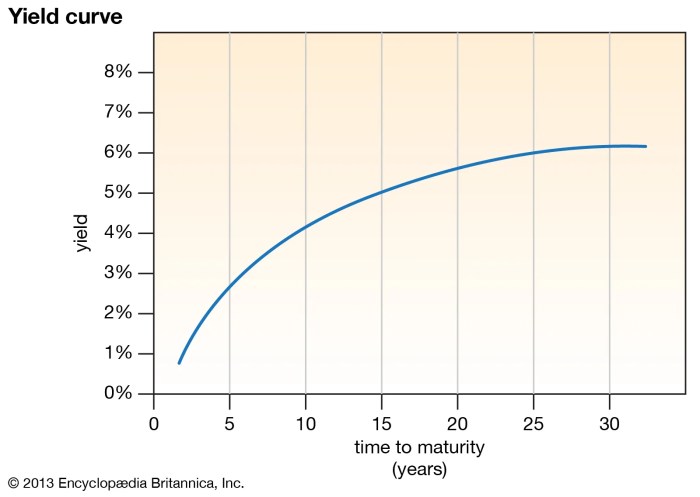
In the context of finance, a yield curve is a graphical representation of the relationship between the interest rates and the time to maturity of debt securities. It shows the yield (return) on bonds of the same credit quality but different maturities. Typically, the yield curve is upward sloping due to the higher interest rates associated with longer-term investments.
Types of Yield Curves
- Normal Yield Curve: This is the most common type of yield curve where longer-term bonds have higher yields compared to shorter-term bonds. It indicates that the market expects the economy to grow steadily.
- Inverted Yield Curve: In this scenario, shorter-term bonds have higher yields than longer-term bonds. It is often seen as a sign of an impending economic recession.
- Flat Yield Curve: This yield curve occurs when the yields on short-term and long-term bonds are very close to each other. It suggests uncertainty in the market about future economic conditions.
Plotting and Representation
When plotting a yield curve, the x-axis represents the time to maturity of the bond (short-term to long-term), while the y-axis represents the yield on the bond. The curve is constructed by connecting the yields of bonds of varying maturities. The shape of the curve can provide insights into investors’ expectations about future interest rates and economic conditions.
Factors Influencing Yield Curves
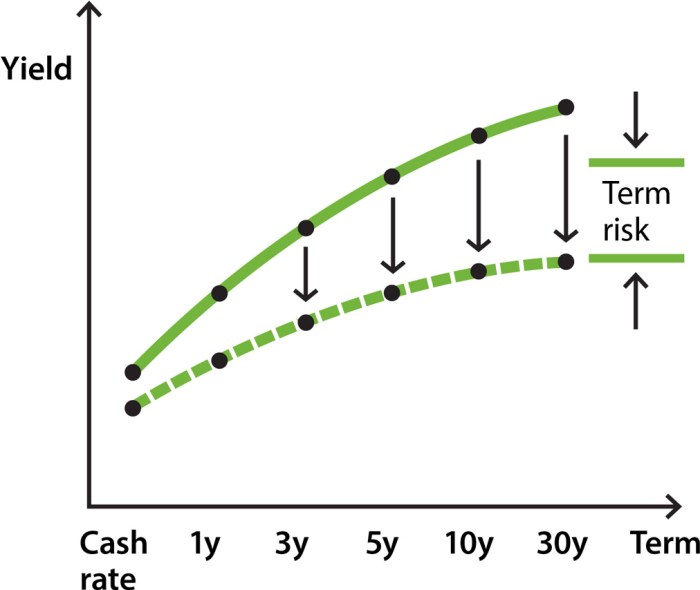
Various economic factors play a significant role in determining the shape of yield curves. These factors can influence market expectations, investor sentiment, and government policies, ultimately impacting yield curve movements.
Economic Factors
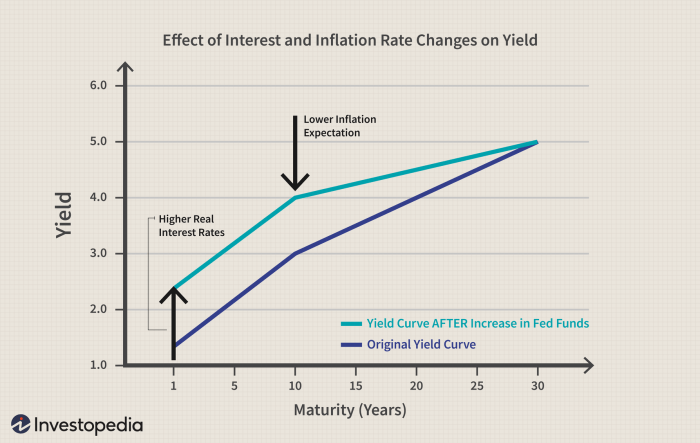
- Interest Rates: Changes in interest rates set by central banks can directly impact the yield curve. For instance, if the central bank raises interest rates, short-term yields may increase more than long-term yields, leading to a steepening yield curve.
- Inflation Expectations: Expectations of future inflation can affect bond prices and yields. Higher inflation expectations may result in a higher yield on longer-term bonds, causing the yield curve to steepen.
- Economic Growth: Strong economic growth can lead to higher yields on long-term bonds as investors seek higher returns. This can result in a steep yield curve.
Market Expectations and Investor Sentiment
- Market expectations about future economic conditions, inflation, and interest rates can drive yield curve movements. Positive sentiment may lead to a flattening yield curve, while negative sentiment could result in a steepening curve.
- Investor sentiment plays a crucial role in shaping the yield curve. If investors are optimistic about the economy, they may demand higher yields on longer-term bonds, causing the yield curve to steepen.
Government Policies and Central Bank Decisions
- Government policies, such as fiscal stimulus or regulatory changes, can impact bond yields and shape the yield curve. For example, increased government spending may lead to higher inflation expectations and a steeper yield curve.
- Central bank decisions, including monetary policy actions and interest rate changes, can have a direct impact on the yield curve. Accommodative policies may flatten the yield curve, while hawkish policies could steepen it.
Relationship Between Yield Curves and Interest Rates
Yield curves play a crucial role in providing insights into future interest rate changes. By analyzing the shape and movement of yield curves, investors and analysts can make informed predictions about the direction of interest rates.
Correlation Between Yield Curve Shapes and Interest Rate Trends
The shape of a yield curve, whether it is steep, flat, or inverted, can indicate the overall sentiment in the market regarding interest rates. A normal yield curve, where short-term interest rates are lower than long-term rates, typically signals expectations of economic growth and higher interest rates in the future. On the other hand, an inverted yield curve, where short-term rates are higher than long-term rates, is often seen as a precursor to an economic downturn and lower interest rates.
A flat yield curve, where short and long-term rates are similar, may indicate uncertainty or a transition period in the economy.
Interpreting Yield Curve Movements for Predictions
Investors closely monitor yield curve movements to gauge potential shifts in interest rates. For example, if the yield curve starts to flatten or invert, it could suggest a looming economic slowdown, prompting investors to adjust their portfolios accordingly. Conversely, a steepening yield curve might indicate expectations of economic expansion and higher interest rates, prompting investors to position themselves for growth opportunities.
Impact of Yield Curves on Interest Rates
When it comes to understanding the impact of yield curves on interest rates, it is essential to recognize how different yield curve shapes can signal changes in short-term and long-term interest rates. Additionally, central banks often utilize yield curve analysis to make informed decisions regarding monetary policy. Historical instances also provide valuable insights into how yield curve movements have affected interest rates over time.
Different Yield Curve Shapes and Their Impact
- Normal Yield Curve: This curve shape indicates that long-term interest rates are higher than short-term rates. It suggests a healthy economic outlook with expectations of future growth. When the yield curve is normal, businesses and consumers tend to borrow more, stimulating economic activity.
- Inverted Yield Curve: An inverted yield curve occurs when short-term interest rates are higher than long-term rates. This shape is often seen as a warning sign of an impending economic downturn or recession. Investors may interpret an inverted yield curve as a signal to reduce riskier investments and move towards safer assets.
- Flat Yield Curve: A flat yield curve occurs when there is little difference between short-term and long-term interest rates. This shape can indicate uncertainty about future economic conditions. In such cases, businesses may delay investment decisions, impacting overall economic growth.
Role of Central Banks in Yield Curve Analysis
- Central banks closely monitor yield curve movements to assess the overall health of the economy and make decisions regarding monetary policy. By analyzing yield curves, central banks can gauge market expectations, inflationary pressures, and potential risks to financial stability.
- Changes in the yield curve can influence central bank decisions on interest rates, with adjustments made to support economic growth, control inflation, or stabilize financial markets. Central banks may use yield curve analysis as a tool to communicate their policy stance to market participants and the public.
Historical Examples of Yield Curve Impact
- During the financial crisis of 2008, an inverted yield curve preceded the recession, signaling a contraction in economic activity. Central banks responded by lowering interest rates and implementing stimulus measures to support the economy.
- In the early 1980s, a steepening yield curve reflected expectations of rising inflation and higher long-term interest rates. Central banks tightened monetary policy to combat inflationary pressures, leading to a recession in some economies.
In conclusion, the dynamics between yield curves and interest rates are complex yet pivotal, shaping economic decisions and market trends. By grasping the significance of this relationship, investors and policymakers can navigate the financial terrain with heightened clarity and insight.
FAQ
How do yield curves impact interest rates?
Yield curves provide valuable insights into future interest rate changes by reflecting market expectations and economic conditions.
What factors influence the shape of yield curves?
Economic factors, market expectations, and government policies play a significant role in shaping yield curves.
How do central banks use yield curve analysis?
Central banks utilize yield curve analysis to make informed monetary policy decisions based on interest rate trends.


