Beginning with Yield curve and monetary policy, the narrative unfolds in a compelling and distinctive manner, drawing readers into a story that promises to be both engaging and uniquely memorable.
Yield curve and monetary policy are two crucial concepts in the financial world that intersect to shape economic decisions and outcomes. Understanding how these elements interact provides valuable insights into market dynamics and policy implications.
Yield Curve
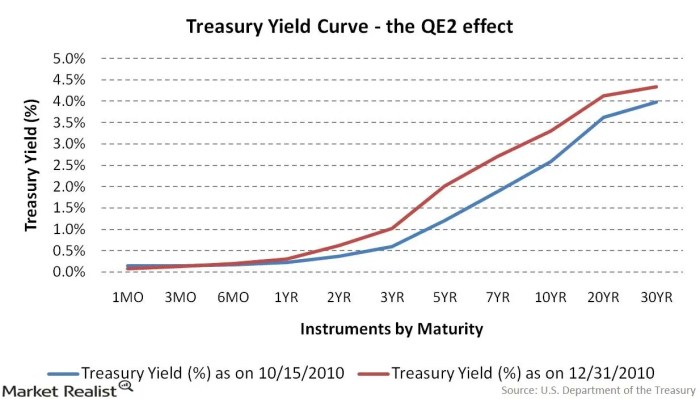
The yield curve is a graphical representation of the interest rates on debt for a range of maturities. It shows the relationship between the interest rate (or cost of borrowing) and the time to maturity of the debt.
Types of Yield Curves
- Normal Yield Curve: In a normal yield curve, longer-term debt instruments have higher interest rates than short-term debt instruments. This indicates an expectation of economic growth.
- Inverted Yield Curve: An inverted yield curve occurs when short-term interest rates are higher than long-term rates. This is often seen as a predictor of an economic recession.
- Flat Yield Curve: A flat yield curve occurs when there is little difference between short-term and long-term interest rates. This can signal uncertainty or economic transition.
Significance of the Yield Curve
The yield curve is used as an indicator of economic conditions and can provide insights into future economic performance. For example, an inverted yield curve is often seen as a warning sign of a recession, while a normal yield curve indicates a healthy economy with expectations of growth.
Historical Yield Curve Movements
- In 2006, the yield curve inverted before the 2008 financial crisis, signaling an impending recession.
- In 2019, the yield curve briefly inverted, raising concerns about the economic outlook.
- During times of economic uncertainty, the yield curve can fluctuate, reflecting market sentiment and expectations.
Monetary Policy
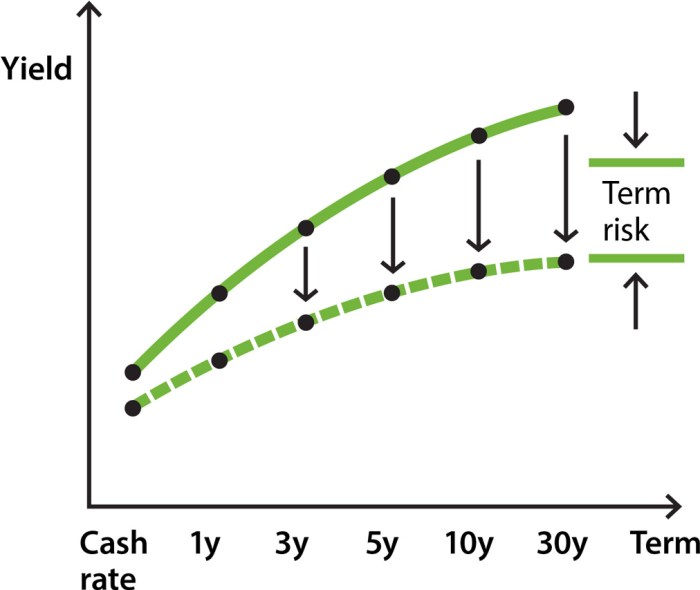
Monetary policy refers to the actions taken by a central bank to control the money supply and achieve macroeconomic goals such as controlling inflation, stabilizing currency exchange rates, and promoting economic growth.Central banks use various monetary policy tools to influence the economy. These tools include open market operations, reserve requirements, and discount rates. By adjusting these tools, central banks can control the amount of money in circulation, thus affecting interest rates and overall economic activity.
Relationship Between Monetary Policy and Interest Rates
Monetary policy plays a crucial role in determining interest rates in an economy. When central banks increase the money supply through measures like lowering interest rates or buying government securities, it leads to a decrease in interest rates. Conversely, when central banks decrease the money supply by selling government securities or raising interest rates, it causes interest rates to rise.
- Lower interest rates resulting from expansionary monetary policy can stimulate borrowing and spending, leading to increased investment and economic growth.
- Conversely, higher interest rates from contractionary monetary policy can reduce borrowing and spending, potentially slowing down economic activity.
Changes in interest rates influence the cost of borrowing for businesses and consumers, affecting their decisions to invest, spend, or save.
Impact of Monetary Policy Changes on Inflation and Economic Growth
- Expansionary monetary policy, which involves lowering interest rates and increasing the money supply, can lead to higher inflation as demand for goods and services rises.
- Conversely, contractionary monetary policy, characterized by higher interest rates and reduced money supply, aims to curb inflation but may also slow down economic growth in the process.
Central banks must strike a balance between promoting economic growth and controlling inflation through their monetary policy decisions.
Yield Curve and Monetary Policy
When it comes to the relationship between the yield curve and monetary policy, there are several key aspects to consider. Changes in monetary policy can have a significant impact on the shape and movement of the yield curve, which is a crucial indicator for investors and policymakers alike.
Yield Curve Control
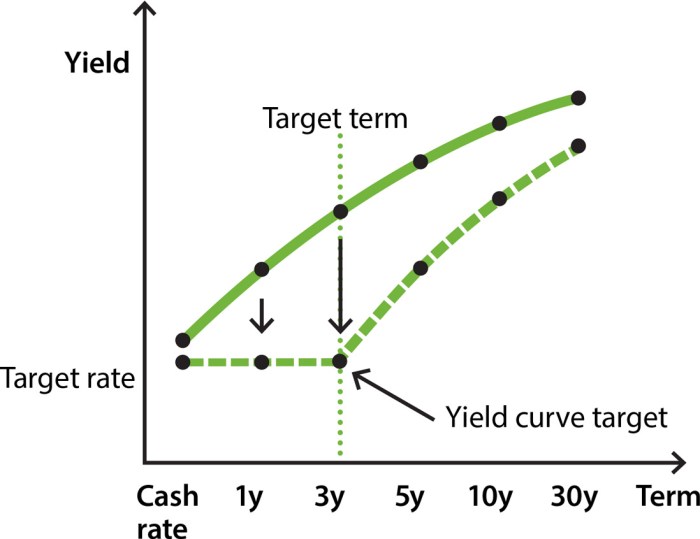
Yield curve control is a strategy employed by central banks to influence longer-term interest rates by targeting specific yields on government bonds. This can involve setting a cap on yields to keep borrowing costs low or a floor to prevent rates from falling too much. By directly managing the yield curve, central banks can exert more control over financial conditions and support economic objectives.
Central Banks and Policy Decisions
Central banks use the yield curve as a tool to guide their policy decisions. By monitoring the slope and movements of the yield curve, central banks can assess market expectations for future interest rates, inflation, and economic growth. This information helps policymakers determine the appropriate stance of monetary policy to achieve their goals of price stability, full employment, and economic growth.
Effectiveness of Monetary Policy Transmission
- In times of economic expansion, a steeper yield curve can signal expectations of higher growth and inflation, providing room for central banks to tighten monetary policy to prevent overheating.
- Conversely, during economic downturns, a flat or inverted yield curve may indicate expectations of lower growth and inflation, prompting central banks to ease monetary policy to stimulate borrowing and investment.
- The effectiveness of monetary policy transmission through the yield curve can vary depending on economic conditions, market expectations, and the credibility of central bank communication.
In conclusion, the relationship between the yield curve and monetary policy is complex yet essential in navigating economic landscapes. By grasping this connection, individuals and policymakers can make informed decisions that contribute to financial stability and growth.
FAQ Corner
What is the significance of an inverted yield curve?
An inverted yield curve is considered a predictor of economic downturns as it signals that short-term interest rates are higher than long-term rates, reflecting market uncertainties.
How do central banks implement yield curve control?
Central banks achieve yield curve control by targeting specific yields on government bonds through bond purchases or sales to influence interest rates and market expectations.
Can changes in monetary policy impact the yield curve?
Yes, shifts in monetary policy, such as interest rate changes or quantitative easing, can alter the shape and movement of the yield curve by affecting short and long-term interest rates.


